.png)
Low-Pressure Cleaning Is the Safe Method for Vinyl, Wood, and Aluminum Fences
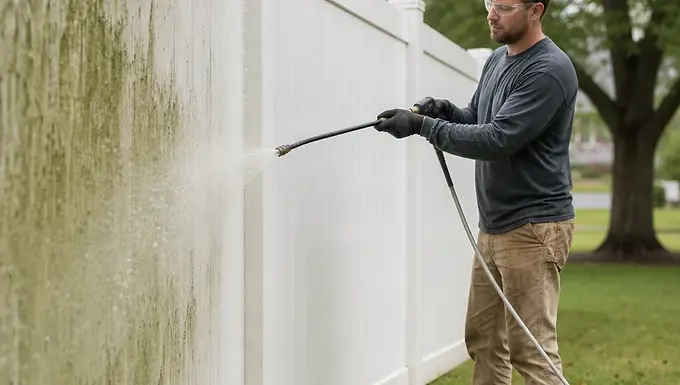
Blasting a fence with high pressure can splinter wood, scar vinyl, and chip the coating on aluminum. Low-pressure fence cleaning lets a fence-safe solution loosen the algae and mildew, so a gentle rinse can carry it away. You get a clean fence without trading away its surface.
A lot of folks picture fence cleaning as a guy with a loud machine peeling grime off in stripes. That works on concrete. On a fence, it can do real harm. Green algae and black mildew grow into the surface. You can't just knock them off. If you force them off with high pressure, the fence often takes the damage before the growth does.
Here's what too much pressure can do to each type of fence:
Vinyl: High pressure can leave marks, roughen the smooth finish, and crack panels that have gone brittle from years of sun. A roughed-up surface also gives algae more places to grab onto next time.
Wood: Strong spray tears up the soft grain and leaves the boards fuzzy and splintered. It can also push water deep into the wood, which isn't what you want on boards that already stay damp.
Aluminum: Most aluminum fences have a painted or coated finish. Hard spray can chip that coating at the edges and joints. Once it's broken, the bare metal starts to look chalky and worn.
Low-pressure cleaning works the other way around. A fence-safe solution goes on first and breaks down the algae and mildew where they're rooted. Then a gentle rinse carries it away. The cleaner does the hard work, so the water doesn't have to. That's why we use low-pressure methods on wood and painted surfaces, the same care we bring to soft washing vinyl siding.
This matters in Elkton. Many fences here run along shaded back lines, tree rows, and low spots that stay damp after rain. The air near the Elk River and the upper Chesapeake Bay holds a lot of moisture. Shade plus moisture is exactly what algae and mildew love. Spring pollen then settles on top and gives the fence that yellow-green film. A fence like that needs the growth killed and lifted off, not sandblasted with water.
Every fence is different, so the owner looks at your fence in person before quoting. That means checking what it's made of, how old it is, how heavy the growth is, and whether any boards or panels are already weak. A 20-year-old wood fence and a newer vinyl privacy fence shouldn't be cleaned the same way. Seeing it first is how we pick the right approach for yours.
Our fence cleaning includes the low-pressure cleaning with a fence-safe solution, algae and mildew removal, and the rinse. It doesn't include staining or sealing, board or post repair, clearing vegetation along the fence line, or cleaning the neighbor's side without their permission. If cleaning shows a loose post or a cracked board, we'll tell you straight so you can decide what to do. We won't pretend a wash fixed it.
Shaded Fences Near the Elk River Collect Algae Faster
If one part of your fence has turned green while the rest still looks okay, check how much sun that part gets. Chances are it sits in shade. After rain or a heavy morning dew, sun dries a fence off fast. In the shade, that same fence can stay damp for hours or even days. Algae and mildew need a damp surface to grow, so shady runs get a big head start.
Around Elkton, there's a lot of moisture to go around. Low ground drains toward the Elk River and the upper Bay, and humid summer nights leave fences wet well into the morning. Put a fence in the shade on top of that, and growth sets in sooner and spreads faster.
These are the spots that tend to stay wet the longest:
The north-facing side, which gets little direct sun
Sections under trees, where leaves block light and keep dripping after the rain stops
Back lines that run along a tree row or wooded edge
Low spots where water sits at the base of the posts
Panels behind shrubs, tall plants, or mulch beds that hold moisture against the fence
Areas the lawn sprinklers hit every day
Early growth is easy to miss. At first, it's a light green haze that rubs off on your finger. Over time, you'll notice darker streaks running down from the top rail, black mildew specks, and a dirty band along the bottom where rain splashes up. On a white vinyl fence, the green shows up fast. On wood, it's more of a gray-green tint, and the boards can feel slick. In spring, pollen settles into that damp film and turns it a yellow-green that's hard to ignore.
Catching it early helps you. Light growth comes off with less solution and less time than growth that's had a few years to settle in. Algae and mildew level is one of the things that moves the price of fence cleaning up or down. If your fence faces the street, early cleaning also helps you stay ahead of an HOA exterior maintenance letter.
Here's the honest part: cleaning doesn't change the shade. A fence under a big oak will grow green again someday. You can slow it down, though, with a few simple habits:
Trim low branches so more sun and air reach the fence
Turn sprinkler heads so they don't soak the panels
Pull mulch and plants back a few inches from the base
Rinse spring pollen off with a garden hose before it builds up
The same damp, shady conditions leave green film on siding, decks, and patios too, which is why our other exterior cleaning services cover those surfaces along with your fence.
See all of our exterior cleaning services.

What Fence Cleaning Costs and What's Included
Most fence cleaning jobs we do fall between $200 and $600. That works out to roughly $1 to $2 per linear foot, for one side of the fence. Our most common job is one side of a 150 ft vinyl privacy fence with green algae on it. That job runs $250.
If your fence sounds a lot like that one, you've got a pretty good idea where you'll land. If it's longer, taller, made of wood, or harder to reach, the number moves. Here's what changes the price:
Linear footage. A short run along one side of the yard costs less than a fence that wraps the whole lot.
One side or both sides. Cleaning your side only is the starting point. Doing both sides means more fence to treat and rinse.
Vinyl, wood, or aluminum. Each material takes a different approach, and wood usually needs more care so the grain doesn't get torn up.
Fence height. A 6 ft privacy fence has a lot more surface than a 4 ft picket or aluminum fence of the same length.
How much algae and mildew there is. A light green haze comes off quicker than thick growth that's been building for years.
Access. Tight spots behind landscaping, garden beds, or a fence line that runs through a neighbor's yard take more time to work around.
That last one comes up a lot with shared fences. We only clean the neighbor's side if they've given permission. If you and your neighbor want the whole fence done, it's worth talking with them first. That way we can plan both sides in one visit and you're not left with a fence that's clean on one side and green on the other.
The price covers the cleaning work laid out earlier on this page. Staining, sealing, repairs, and clearing brush along the fence aren't part of it. We don't offer financing, so the price you get is the price you pay, with no payment plans or added fees on top.
You won't get a firm number from us over the phone based on a guess. The owner comes out and looks at your fence in person before quoting. That means walking the length of it, checking the material and height, seeing how heavy the growth is, and noting any tricky spots. The estimate is free, and there's no pressure to book once you have it.
We think that's the fair way to do it. You know exactly what you're paying for before any work starts. If something isn't right when we're done, we'll come back and fix it until you're happy, or we'll refund you. For a small, local business, that's how we earn the next job in Elkton, not by surprising anyone with the bill.
Shared Fences and Scope: One Side vs. Both Sides
Most fences have two faces, and they don't always age the same way. The side you look at from your patio might be fine. The side facing the neighbor or the street might be green from top to bottom. Before you book, it helps to know which side needs the work and who gets a say in it.
Start by walking both sides if you can. Shade decides a lot here. If your fence runs east to west, one face points north and gets very little sun. That face often grows the heaviest algae and mildew, and sometimes it's the one you never see. You might be happy with your side and not realize the other side looks a lot worse.
One side is usually enough when:
The fence sits inside your yard, and nobody really sees the outer face
The growth you care about is on your side, and the other side is in sun and stays fairly clean
The outer face belongs to a neighbor who doesn't want it cleaned right now
Both sides make more sense when:
The fence faces a street or common area, and an HOA exterior maintenance letter points to the outside face
You share the fence with a neighbor, and you both want it to look the same
You're getting ready to sell, and buyers will see the fence from the road and the yard
The outer face is the shaded one, and that's where the green is
That HOA point trips people up. A letter about a dirty fence is often about the face people see from the sidewalk. Cleaning only the side inside your yard may not clear it up. Read the letter closely, and let us know what it says when the owner comes out for your estimate.
If your neighbor isn't on board or you can't reach them, that's okay. We'll clean your side, and you'll still have a clean fence every time you step outside. Their side just stays the way it is until they're ready.
If you do want to ask, keep it simple. Here's what most neighbors want to know:
That the cleaning uses low pressure and a fence-safe solution, not a hard blast
Roughly when the work will happen
Whether anyone will need to step into their yard to reach the fence
That it's fine to say no
Access matters for the outer face too. Sometimes the only way to reach it is through a neighbor's yard or a tight strip behind shrubs and garden beds. We don't clear plants along the fence line, so if vines or brush are growing into the panels, trim them back before the cleaning so the whole surface can get treated and rinsed.
Not sure which way to go? When the owner walks your fence for the free estimate, ask for a look at both faces. You'll get an honest read on whether one side is enough or if the other side is worth doing too, so you can decide with the full picture in front of you.

HOA Letters and Home Sale Prep Are Common Reasons to Clean a Fence Now
Sometimes a green fence is just something you've been meaning to deal with. Other times there's a clock running. Two deadlines push many folks to call: a letter from the HOA, or a house that's about to go on the market. Both are good reasons to clean your fence now rather than next season, and both go smoother when you plan a little.
An HOA exterior maintenance letter usually names the problem and gives you a date to fix it. Don't let it sit on the counter. Read it for three things: what it says is wrong, which part of the fence it means, and when they want it done. That's often the side facing the street. Then get your free estimate set up soon, so the cleaning happens with time to spare and not the day before a re-inspection.
A few things help when an HOA letter is driving the job:
Keep the letter handy and show it to the owner at the estimate, so the cleaning matches what the HOA asked for
Take a quick photo of the fence before and after, in case the HOA wants proof it's been handled
Ask your HOA if the letter also covers staining or repairs, since cleaning alone won't change faded color or fix a leaning post
Trim back any vines or shrubs touching the fence ahead of time so the whole surface can be treated
That third point matters. If the HOA wants a fresh stain on a wood fence, cleaning is a good first step, because stain goes on better over clean boards. But we don't do staining or sealing, so you'd need to plan that part separately. Better to know that now than find out after the deadline.
Selling is a different kind of deadline. Buyers notice a fence from the curb, in the backyard, and in every listing photo that shows the yard. A green-streaked privacy fence makes a yard look neglected, even when the house itself is in good shape. A clean fence looks cared for, and that's the feeling you want buyers to have when they walk out the back door.
If you're getting ready to sell, try to have the fence cleaned before listing photos are taken. Photos stick around long after the cleaning is done. It's also worth having the fence cleaned before any buyer walk-throughs, not after. And if the cleaning turns up a loose post or a cracked board, you'll hear about it straight from us, which gives you time to fix it or price it in before a buyer finds it.
Spring adds its own pressure in Elkton. Pollen piles onto damp fences right around the time many people list homes and HOAs walk the neighborhood. A fence that looked fine in March can look yellow-green by May. If you know a deadline is coming, it's smart to get on the schedule early instead of waiting until the growth gets worse.

See How We Handle Fence Cleaning in Elkton
Frequently Asked Questions
What's the best way to clean an old, heavily grown fence?
An old fence with heavy algae and mildew needs a fence-safe cleaning solution applied first, then a gentle low-pressure rinse to lift the growth away. The older and more built-up the growth, the more solution and time it takes compared to a fence that's just starting to turn green. Boards that have gone brittle or weak with age are also more likely to show damage from high pressure, so a gentle approach matters even more on an older fence.
Is a pressure washer safe to use on a vinyl fence?
No, high pressure is risky on vinyl because it can leave marks, roughen the smooth finish, and crack panels that have gotten brittle from years of sun. A low-pressure method with a fence-safe cleaning solution breaks down algae and mildew first, so only a gentle rinse is needed to carry it away without damaging the surface.
Can you clean garden fences, or just privacy and yard fences?
We clean both. Garden fences get the same low-pressure cleaning approach as any other wood, vinyl, or aluminum fence. Garden fences often sit near plants, mulch beds, or shrubs that hold moisture against the panels, which speeds up algae growth, so they're a common type of fence that needs this kind of care.
Ready to Get Started?
Call (302) 723-8500 for a free estimate. The owner will look at your property in person and give you a clear price before any work starts.