.png)
What a Patio Cleaning Job Includes
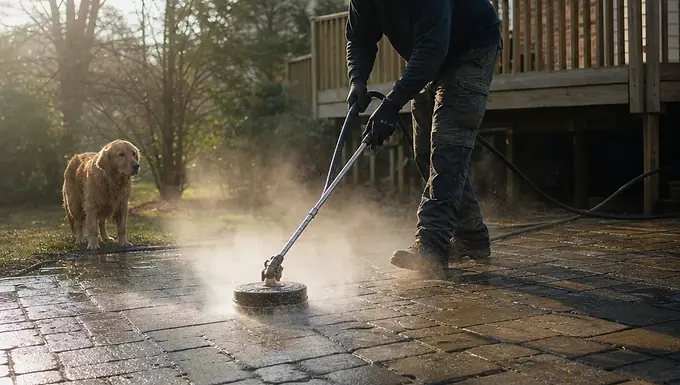
Every patio cleaning job includes surface cleaning, algae and mildew treatment, a joint flush-out, and a rinse of nearby walls. Sealing, polymeric sand replacement, weed killer for joints, and heavy furniture moving aren't part of the job.
When you book a patio cleaning with us, you should know what you're getting before we ever pull up. Nobody likes finding out about a missing step after the truck leaves. Here's what's included.
Surface cleaning: the whole patio gets pressure washed, so the dirt, pollen film, and grime you walk on every day come off.
Algae and mildew treatment: this goes after the green and black growth that makes shady patios slick. Around Elkton, damp air near the Elk River and the Bay keeps it coming back.
Joint flush-out: we clear the gunk packed between pavers or in concrete control joints, including moss, algae, and weed growth.
Rinse of nearby walls: power washing kicks up spray and grit, so we rinse the walls next to the patio before we're done.
If your patio has older brick, we use low-pressure methods so the surface comes clean without getting chewed up. The same goes for wood or painted surfaces next to the patio.
Here's what isn't included. We're telling you up front so you can plan for it.
Polymeric sand replacement: flushing out paver joints can loosen old sand along with the dirt. If your joints already look low or empty, plan on re-sanding after the cleaning.
Sealing: we don't seal patios as part of this job.
Weed killer for joints: the flush-out pulls growth out of the cracks, but we don't apply weed killer. Roots left deep in the joints can sprout again.
Heavy furniture moving: please clear off big tables, heavy planters, and loaded grill carts before we arrive.
Our typical price range is $125-$350. The most common job we do is a back patio of concrete or pavers, about 300-400 sq ft, and that one runs $175. Where your patio lands depends on a few things: patio size, pavers vs concrete vs flagstone, moss, algae and weed growth in the joints, grill grease or food stains, and furniture that needs moving.
Think of a 350-square-foot paver patio that just got a light coat of spring pollen. Compare it to a flagstone patio under a big maple with moss in every joint and a grease spot under the grill. They're both patios, but they aren't the same job. That's why the owner looks at every property before quoting, and the estimate is free. You'll know your price before any work starts.
If something isn't right when we're done, we'll come back and fix it until you're happy, or we'll refund you. We don't offer financing, so the price on your estimate is simply what you pay.
Why Patio Joints Collect Algae and Moss in Cecil County
If the middle of your patio looks fine but the lines between the pavers keep turning green, you're not doing anything wrong. The joints are simply the easiest place on a patio for things to grow. A good cleaning has to reach down into them, not just skim the top.
Think about what a joint is. It's a narrow strip of sand or a crack that sits a little lower than the stone around it. Water runs into it and stays there after the rest of the patio dries. Dirt, leaf bits, and pollen wash in with that water and settle at the bottom. Before long you've got a thin line of damp, soft material. That's basically a tiny garden bed, and moss and algae move right in.
Here in Elkton, a few local things stack the deck in their favor:
Damp air. Being close to the Elk River and the upper Chesapeake Bay means plenty of humid days. Shaded joints can stay wet for a long time after a rain.
Spring pollen. Every spring, a yellow film covers everything outside. When it rinses into the joints, it adds food for whatever's already growing there.
Shade and trees. A patio on the north side of the house, or one under a big tree, gets less sun to dry it out. Falling leaves also break down into the joints.
Freeze-thaw cycles. Our winters swing above and below freezing a lot. Water in small cracks freezes, swells, and slowly opens them wider. Wider cracks hold more dirt and water, so growth gets a better grip each year.
The type of patio matters too. Pavers have lots of joints packed close together, so a paver patio can go green fast once the sand gets low. Flagstone often has wider, uneven gaps that hold soil, so moss and weeds can really dig in. Concrete has fewer joints, but its control joints and any freeze-thaw cracks collect the same mix of grime.
So why does it matter? Part of it is looks. A patio with clean stone and dark green lines still looks dirty. The bigger issue is safety and wear. Algae makes a surface slick, especially on shady steps and walkways where people don't expect it. Roots and moss in the joints can also push sand out and let pavers shift over time.
That's also why growth comes back if only the surface gets rinsed. If the soft, packed material stays down in the joint, so do the spores and roots. This is the reason the joint flush-out is part of every patio job we do. As mentioned above, it can loosen old sand along with the gunk, so keep an eye on joints that already look low.
A little green in a sunny corner isn't an emergency, and it's fine to wait for a dry week before you book. But if your joints look dark, fuzzy, or slick, or if you've got an HOA maintenance letter sitting on the counter, it's worth having someone look at it. That same damp, shady setting can also leave growth on nearby walks and fences, and our pressure washing services for homes in Elkton cover those surfaces as well.
See all of our exterior cleaning services.
Matching the Right Pressure to Pavers, Concrete, and Flagstone
Here's the part most folks don't think about until it's too late. More pressure doesn't mean a cleaner patio. Too much force can scar a patio in a few seconds, and those marks don't wash out. Too little force leaves the growth behind. The goal is to use just enough to get the job done on the surface you've got.
Pavers, concrete, and flagstone each react to power washing in their own way.
Pavers: The blocks are tough, but the sand between them isn't. Aim a strong spray straight down a joint and the sand blasts right out along with the moss. Older pavers that have already faded can also lose some of their top layer, leaving them rough and speckled.
Concrete: A newer slab can handle a fair amount of force. Older concrete is another story, especially if those freeze-thaw winters have left it flaky or pitted on top. Hit that weak top layer too hard and it peels off in patches. Holding the wand too close or moving unevenly can also leave light and dark stripes across the slab.
Flagstone: This is natural stone, so no two patios are alike. Some stone is hard and dense. Other kinds are softer or built in thin layers that can flake or lift under a hard spray. Flagstone is also often set in mortar or soil, and loose pieces or cracked mortar don't hold up well to heavy pressure.
On older brick, we use low-pressure methods, the same as we do on wood and painted surfaces nearby. Old brick and its mortar can wear away faster than most people expect.
So how does a patio get clean without all that force? The algae and mildew treatment does a lot of the heavy lifting. When the growth is loosened before the rinse, you don't need to blast the stone to get it off. That matters most in the shady, damp spots near the house, where the green stuff grips the hardest.
If you've had a patio washed before and aren't sure it was done right, here's what to look for:
Wavy stripes or swirl marks across concrete
A fuzzy or rough feel where the surface used to be smooth
Paver joints that were full before the cleaning and empty after
Small pits, chips, or flakes on stone that weren't there before
None of that means you should be scared of pressure washing. It just means the person doing it should look at your patio first. Before you hire anyone, it's fair to ask, "What's my patio made of, and how will you handle it?" A careful provider should have a clear answer and won't treat every slab the same.
That's one reason the owner looks at every property before quoting. A 20-year-old concrete slab with freeze-thaw wear, a newer paver patio, and a mossy flagstone path out by the garden all need different handling. It's much better to spot that during a free estimate than after the damage is done.
Best Time of Year to Clean an Elkton Patio
You can clean a patio almost any time it's above freezing. Still, some times of year give you more for your money than others. The trick is to clean after the mess shows up, not right before it.
Late spring is the time most folks think of, and it makes sense. Around Elkton, spring pollen coats everything in yellow, and it washes into the joints with every rain. If you clean in early April, there's a good chance the patio is fuzzy and yellow again in two weeks. Waiting until the heaviest pollen has passed means the patio stays clean into summer, right when you want to use it for cookouts and parties.
Fall is the other strong window. Once most of the leaves are down, a cleaning clears out the wet leaf mush, the summer grill grease, and the green growth that built up over the humid months. It also means your patio heads into winter with clean joints instead of packed dirt holding water. With the freeze-thaw swings we get here, that's a better way to start the cold season.
Winter is the one time we'd steer you away from. When temps are near or below freezing, rinse water can turn to ice on the surface and sit in the joints. That's a slip hazard, and it's the exact thing you don't want soaking into cracks. A mild, dry stretch in late winter can work, but there's usually no reason to rush it.
Here's a quick way to think about it:
Late spring, after pollen eases up: a good pick if you want the patio ready for summer.
Early fall, after leaves drop: a good pick if summer left grease, stains, and green joints behind.
Before an event: give yourself a few dry days afterward so the patio and joints can dry out.
Cold snaps: wait it out. Washing in freezing weather isn't worth the ice.
If you're planning to re-sand your paver joints after the cleaning, pick a stretch of dry weather. Joints need to be fully dry before new sand goes in, so a rainy week in May can push that back. Building in a little buffer saves you a headache.
Most patios don't need a cleaning every season. A sunny patio with little shade can often go a full year or more between washes. A sweep and a hose rinse now and then keeps pollen and loose dirt from settling in. A shady patio near the house, under trees, or close to the water tends to need it more often, since the damp hangs around longer.
There are also times when the calendar doesn't matter. If your steps or walkway are slick with algae, that's a safety issue, not a looks issue, so don't wait for the perfect month. The same goes for an HOA letter with a maintenance deadline on it. In those cases, the best time is as soon as you get a dry, above-freezing day.
When You Don't Need Professional Patio Cleaning
Not every patio needs us. We'd rather tell you that now than have you pay for a job a broom and a garden hose could handle. Here are the times you can skip a professional cleaning, wait a bit, or call someone else first.
Your patio just looks a little dusty or yellow. A sunny patio with a light coat of spring pollen or loose dirt usually doesn't need power washing. Sweep it, give it a good hose rinse, and see how it looks once it dries. If the stone looks clean and the joints aren't green or dark, you're in good shape. If it's still the middle of pollen season, it's fine to just wait. Anything you clean now will be yellow again soon.
You've got a few small spots, not a whole patio problem. A couple of weeds in a sunny joint can come out by hand. A small spill from a cookout can often be scrubbed with a stiff brush and some dish soap and water. You don't need to hire anyone to deal with one corner of a patio.
The patio is about to be torn out or rebuilt. If you're replacing it this year, don't spend money cleaning it first. The same goes if the patio is badly broken. Cleaning won't fix it if the pavers have heaved or sunk, the concrete is cracked through and shifting, or flagstone pieces are loose and rocking. A hardscape or concrete contractor should look at that first. Once the repairs are done, a cleaning makes a lot more sense.
What you really want is sealing or new joint sand. We don't do either one as part of a patio cleaning. Getting the patio clean usually comes before sealing or re-sanding, so it may still be part of the plan. But if the surface is already clean and your only worry is low joints or a faded finish, the person you need is whoever does that work.
You're comfortable doing it yourself. Lots of folks around Elkton own or rent a pressure washer and do a fine job on a plain concrete slab. If that's you, go for it. Just keep in mind what we covered about pressure above. Start soft, keep the wand moving, and go easy on paver joints, older concrete, flagstone, and brick. If you're unsure about your surface, try a hidden spot first.
So when does it make sense to call in help? Usually it's when the problem goes past what a hose can fix:
Algae or moss that's turned shady areas slick
Joints that stay green even after you rinse them
Grill grease or food stains that won't scrub out
A patio too big to handle in an afternoon
An HOA letter with a maintenance deadline
If none of that sounds like your patio, you can probably save your money for now.
See How We Handle Patio Cleaning in Elkton
Frequently Asked Questions
How long does it take for my patio to dry after cleaning?
Most patios dry within a few hours on a warm, sunny day, but shaded joints can take longer. If you're planning to re-sand paver joints afterward, wait for a stretch of dry weather first. Joints need to be fully dry before new sand goes in, so a rainy week can push that timeline back.
Can I walk on my patio right after it's cleaned?
You can walk on it carefully, but wet stone can be slippery right after cleaning, especially in shady spots. Let the surface dry before moving furniture back or letting kids and pets run around. This matters most on patios near the Elk River or the Bay, where damp air keeps surfaces wet longer.
Will cleaning remove stains from a grill or firepit?
Most light grease and food stains lift during a normal cleaning. Older, deep-set spots under a grill may not come out completely, so the owner will look at them during your free estimate and tell you what to expect. Stains that have soaked in over a long time can take a bit more work than a quick rinse.
Ready to Get Started?
Call (302) 723-8500 for a free estimate. The owner will look at your property in person and give you a clear price before any work starts.