.png)
What Pool Deck Cleaning Includes and Excludes
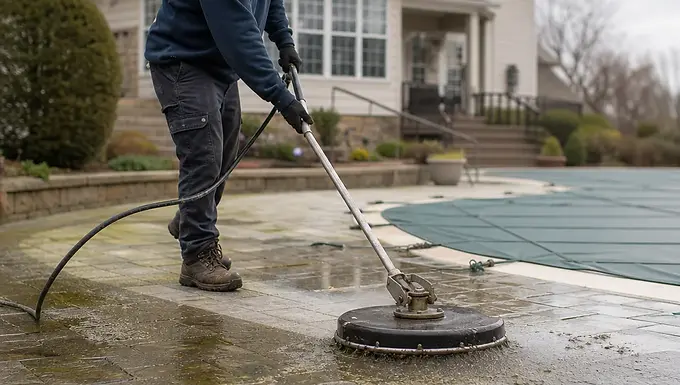
Our pool deck cleaning covers the deck surface and the coping, an algae treatment, and a careful rinse aimed away from your pool. It doesn't cover anything inside the pool, the water chemistry, the tile line, sealing, or re-sanding pavers. Knowing that line up front helps you plan and keeps the job honest.
Before you book, it helps to know exactly where our job starts and stops. A pool deck sits right next to water you swim in and equipment you paid good money for. So we keep our work focused on the hard surfaces around the pool, and we're upfront about the parts that belong to a pool service.
Here's what's included when we clean your pool deck:
Surface cleaning of the pool deck. That's the dirt, grime, and spring pollen that settles on the concrete or pavers and turns into a gritty film.
Cleaning the coping, the edge stones or concrete lip right at the pool's rim. This is where hands and feet grab on, so it matters.
Algae treatment. Green and black growth on a pool deck isn't just ugly. It can make the surface slick where kids and guests walk barefoot.
A careful rinse directed away from the pool. We aim the dirty water and cleaning runoff away from your pool, so the gunk we lift off the deck doesn't end up in your water.
And here's what's not included:
Cleaning inside the pool, including the walls and floor.
Pool water balancing. Your chemicals and water testing stay with you or your pool company.
Tile line cleaning, the scummy band at the waterline.
Sealing the deck after it's cleaned.
Paver re-sanding, which means refilling the sand in the joints between pavers.
Why draw the line there? Each of those jobs is its own skill. Water balancing and tile line work happen in and at the pool water, and that's pool service territory. We'd rather tell you that plainly than do a so-so job on something outside our lane.
If you've got pavers, it's worth thinking about the joint sand before we show up. Washing can loosen or wash out some of the sand between pavers, and re-sanding isn't part of our job. Plenty of folks handle that themselves with a bag of joint sand from the hardware store, or they line it up with a hardscape contractor. Sealing works the same way. If you want your deck sealed, plan it for after we've cleaned it.
One more thing a cleaning won't fix is damage that's already there. Elkton winters bring a lot of freezing and thawing, and that can crack and flake concrete over time. A good power washing will show you the true condition of your deck, but it won't patch cracks or rebuild worn spots. If we notice something like that while we're there, we'll point it out so you're not caught off guard.
The owner looks at every property before giving a quote, and estimates are free. That walk-around is where we confirm what surfaces you've got, whether that's concrete, pavers, stamped concrete, or coping, and whether your pool is open or covered. That way you know exactly what you're getting before any work starts.
Keeping Pool Water and Equipment Protected During Cleaning
Here's the honest truth about pool deck cleaning: getting the deck clean is the easy part. The real job is getting it clean without hurting the pool sitting right next to it. Everything we lift off your deck has to go somewhere, and it shouldn't go in your water.
Think about what comes off a pool deck around Elkton. There's spring pollen, which coats everything yellow-green for weeks. There's dirt, leaf grime, and the algae we treat. If that slurry washes straight into the pool, you can end up with cloudy water, a dirty filter, and a chemical balance that's suddenly off. That's why our rinse is aimed away from the pool, not toward it.
Your pool equipment deserves the same respect. Most decks have things built into them or sitting nearby that you don't want blasted with dirty water:
Skimmer openings at the pool's edge, which pull water and debris straight to your filter
The pump, filter, and heater, often sitting on a pad near the deck
Pool lights, ladders, and handrails set into the coping or deck
A safety cover or automatic cover, if your pool has one
Whether your pool is open or covered changes the job. An open pool means the water is right there, so every pass along the coping takes more care. A covered pool keeps the water out of reach, but now the cover itself is in the splash zone. Neither one is a problem. They're just different setups, and we plan for the one you've got.
That's also why care shows up in the price. How careful we need to be around your pool water and equipment is one of the things that moves the cost up or down. A wide-open concrete deck with the equipment pad tucked off to the side is simpler than a tight paver deck with skimmers, lights, and a heater all close together. We'd rather tell you that up front than rush the tricky spots to hit a lower number.
Where the water goes matters past your fence line too. Elkton sits on the Elk River, which flows into the Chesapeake Bay, so runoff from yards and driveways here doesn't just disappear. Paying attention to where our rinse water heads is part of doing this work like a neighbor and not like someone passing through.
Since the owner looks at every property before quoting, the walk-around is your chance to show us what you're worried about. Maybe it's a new heater, a cover you just replaced, or a skimmer right where the algae is worst. Point it out, and it becomes part of the plan before any water hits the deck.
If you're getting quotes from a few companies, a fair question to ask each one is simple: where does the dirty water go? A careful provider should have a straight answer. The same care carries over to the other exterior cleaning services we offer, whether it's a patio, a driveway, or a wood deck, but a pool deck is where it matters most, because there's water you swim in a few feet away.
See all of our exterior cleaning services.
Surface Type Changes the Approach
Not every pool deck should be cleaned the same way. The surface around your pool decides how much pressure it can take, how the algae gets treated, and how much time the job needs. Getting that wrong can do more harm than the dirt ever did. That's why we figure out what you've got before anyone turns on a machine.
Here's how the common pool deck surfaces differ:
Plain concrete. This is the most common pool deck, and it's usually the sturdiest. It can handle a solid power washing. But too much pressure held too close can still leave stripes or etched lines in the surface. Older concrete that's already flaking from freeze-thaw needs a lighter touch so we don't make worn spots worse.
Pavers. The pavers themselves are tough. The weak spot is the sand in the joints, which can wash out, as we covered above. Pavers also tend to hold algae and weeds in those joints, so the cleaning has to reach the gaps without blasting them empty.
Stamped concrete. Stamped decks often have color and a protective coat on top. Heavy pressure can wear that finish down and leave the deck looking blotchy. The pattern's grooves also trap grime, so it takes patience, not force.
Coping. The coping is the edge right at the pool's rim. It might be poured concrete, stone, or brick. It sits closest to the water, and it's often a different material than the deck around it. That means it may need its own approach, even on the same job.
If your coping or deck has older brick, painted areas, or wood nearby, we use low-pressure methods on those surfaces. Older brick and painted surfaces don't hold up well to a strong stream of water. A gentler wash keeps the mortar and paint where they belong while still getting the green and black growth off.
A lot of pool decks are a mix. You might have a concrete deck with brick coping, or pavers that run into a stamped concrete patio. Picture a backyard where the main deck looks fine, but the shady corner by the fence stays damp and turns green every spring. That corner might need more algae treatment than the rest, and the coping beside it might need a softer touch. A one-size-fits-all approach misses those details.
Surface type also shows up in the price. Square footage, surface type (concrete, pavers, stamped concrete, coping), and algae and slip-hazard buildup are all things that move the cost up or down. Our most common job is a concrete pool deck around an in-ground pool, about 600-1,000 sq ft, and that job runs $300. Our typical price range is $200-$500. A bigger deck, a delicate finish, or heavy algae on a tricky surface can push a job toward the higher end.
Not sure what your deck is made of? That's okay. The owner looks at your property before giving a quote, so we'll sort it out together during the free estimate. You'll know which surfaces need extra care, and why, before any work starts.
What Drives Your Pool Deck Cleaning Price
Nobody likes a price that changes once the work starts. So here's how we think about the cost of cleaning your pool deck, in plain terms. We already covered how surface type and the care around your pool water and equipment affect the job. Here's what else goes into your number.
How big your deck is. Square footage is the starting point. More deck means more time and more cleaning solution. If you're curious, measure the length and width of each section and multiply them. That gives you a rough idea of where you fall next to our most common job, which is about 600-1,000 sq ft.
How long the buildup has been there. A deck that gets washed every year usually just has a film of dirt and pollen on it. A deck that's gone a few seasons can have thick green and black growth in the joints and on the coping. That growth makes the surface slick, and it takes more algae treatment to get it off safely.
Whether your pool is open or covered. This changes how we set up the job, so it's part of the price too.
Timing can help you here. Lots of folks around Elkton like to get the deck cleaned before they open the pool, so the season starts with clean coping and no slippery spots where the kids run. Others wait until the spring pollen settles down so it doesn't coat the deck again right away. Either way works. Just tell us your plans during the estimate and we'll price the job for the setup you'll have that day.
If you're getting a few quotes, make sure you're comparing the same job. Our price covers surface cleaning of the deck and coping, algae treatment, and a careful rinse directed away from the pool. It doesn't include sealing, paver re-sanding, tile line cleaning, or anything inside the pool. A quote that looks much higher might include sealing. A quote that looks much lower might skip the algae treatment. These questions help you sort it out:
Is algae treatment included, or is it extra?
Is the coping cleaned, or just the flat deck?
Will the price change after you see the deck up close?
Who's doing the work on my property?
Here's how we answer those for our own work. The owner looks at your property before quoting, so the number you get is based on your real deck, not a guess over the phone. The work is done by the owner or a trusted employee. We don't offer financing, so we try to keep the job focused and the price fair from the start.
And if something isn't right when we're done, we'll come back and fix it until you're happy. If we can't, you get a refund. That's how we'd want to be treated if we were hiring someone to work a few feet from our own pool.
Open Pool vs. Covered Pool Changes the Job
Should you book before you pull the cover, or after the pool's open? Either works. What matters is that we know which one we're walking into, because the details on cleaning day are different. Here's what each setup looks like and what you can do to get ready.
If your pool is still covered, the type of cover makes a real difference.
Mesh safety covers let rain soak through to the pool. That's how they're built. It also means some rinse water can get through too, so a mesh cover doesn't seal the pool off from the deck.
Solid covers keep water out, but they collect it on top. After a wet Elkton winter, there's often a puddle of leaves and dark water sitting on the cover. It helps to pump that off before we come, so it doesn't spill over the edge while we're working near it.
Automatic covers usually run in a track along the coping. That track sits right where we clean, so we'll want to know where it is and whether the cover is open or closed that day.
Safety cover anchors and straps are set into the deck itself. They're part of the surface we're working around, so it helps to know where they are.
One thing to know up front: the cover isn't part of the deck, so cleaning it isn't on our included list. If your cover is grimy, it's worth bringing up during the estimate so nobody's guessing.
If your pool is already open, the biggest thing is people. Pick a day and time when nobody needs to swim. Wet deck plus cleaning solution plus kids running barefoot isn't a good mix. Let the family know the pool's off limits while we're there, and keep pets inside if you can.
Picture a Saturday in June. The pool's been open two weeks, the kids want to jump in, and there's a pile of floats and noodles on the coping. Moving that stuff the night before saves time on cleaning day and lets us reach every inch of the deck.
Clear off floats, toys, towels, and pool furniture if you can. Anything left on the deck is something we have to work around.
Tell us if you have a robot cleaner or a hose running across the deck.
Afterward, take a quick look at your skimmer baskets. A bit of loose debris can still blow in, even with a careful rinse.
There's no wrong choice here. Some folks like the deck cleaned while the cover's still on, so the pool opens to a clean deck. Others wait until the water's running and they've seen how much green crept in over the winter. What causes problems is surprises, like a cover we didn't know about or a swim party planned for that afternoon. Tell us your plans when the owner comes out to look at your property, and we'll set up the job for the pool you'll have that day.

See How We Handle Pool Deck Cleaning in Elkton
Frequently Asked Questions
Will pool chlorine clean the deck for me?
No, chlorine keeps your pool water sanitized, but it does not clean the deck surface around it. Algae and grime on concrete, pavers, or coping need a direct surface treatment, not just splash from the water. That's why our deck cleaning includes its own algae treatment aimed at the deck itself, separate from your pool chemistry.
Is power washing better than using a deck cleaner for a pool deck?
Power washing reaches dirt and algae that a store-bought deck cleaner alone often can't lift, especially in joints and textured concrete. The key is matching pressure to the surface, since plain concrete can handle more force than stamped concrete, older brick, or painted areas. We size up each surface before cleaning so you get a thorough wash without stripping a finish or etching the concrete.
What's the best way to get algae off a pool deck?
The best approach pairs an algae treatment with a controlled rinse, matched to your deck's surface. Green and black growth tends to collect in shady corners and paver joints, and it can make the deck slick underfoot. Treating it properly, rather than just pressure blasting it, gets it off with less risk to the sand in paver joints or a stamped finish.
Ready to Get Started?
Call (302) 723-8500 for a free estimate. The owner will look at your property in person and give you a clear price before any work starts.