.png)
What's Included in a Trash Can Cleaning Service
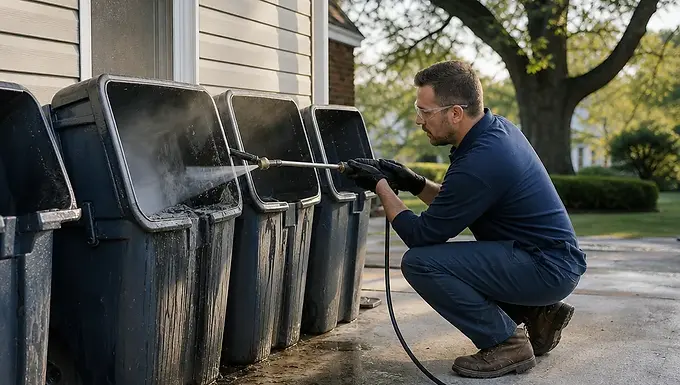
Every cleaning includes a high-pressure wash inside and out, lid and hinge cleaning, an EPA-registered sanitizer that kills odor-causing bacteria, and a deodorizing treatment. A one-time clean is $75 for one can, $120 for two, and $25 for each additional can. Plans start from $35/month or $65/quarter for up to 2 cans.
A lot of folks figure a trash can clean is just a quick spray with a hose. That's what you'd do yourself, and it's why the smell keeps coming back. Water knocks loose some of the gunk, but it doesn't kill the bacteria stuck to the bottom and sides. That bacteria causes the smell, and it draws flies. So when we clean your bins, we don't stop at rinsing.
Here's what you get with every can:
A high-pressure wash inside and out. The inside is where the mess lives, but the outside gets grimy too from sitting by the curb and getting rolled down the driveway.
Lid and hinge cleaning. The hinge is a spot people miss, and old garbage juice likes to hide there.
An EPA-registered sanitizer that kills odor-causing bacteria. This is the step a hose can't do for you.
A deodorizing treatment, so the can smells fresh when you lift the lid next time.
Our most common job is a one-time bin blast of a trash can and a recycling can on trash day. That's $120 for two cans. If you only need one can done, it's $75. Got more than two? Each additional can is $25.
If you'd rather not let things build back up, we also offer plans from $35/month or $65/quarter for up to 2 cans. A plan makes sense if your bins get ripe fast, like in the summer heat, or if you just don't want to think about it again.
What can change the cost? It comes down to a few honest things: how many cans you have, whether you want a one-time clean or a monthly or quarterly plan, how long it's been since the last clean, and whether there are maggots or heavy buildup. A can that's been sitting dirty for a year takes more work than one that was cleaned last season. We'll tell you up front if any of that applies to yours, so there are no surprises.
We also want to be clear about what's not included. We don't clean dumpsters or commercial containers. We don't haul trash, so the can needs to be empty when we get there, which is why trash day works so well. And we don't replace damaged cans. If your lid is cracked or a wheel's busted, you'll want to call your hauler or pick up a new one.
Either the owner or a trusted employee does the work, so you're dealing with a local Elkton business that cares how the job turns out. And if something isn't right after we clean your cans, we'll come back and fix it until you're happy, or we'll refund you.

Why a Hose Rinse Isn't the Same as a Professional Clean
We get it. You've got a hose, a free Saturday, and a can that smells bad. Why pay someone? Sometimes you don't need to, and we'll tell you when. Most of the time, though, a hose rinse moves the mess around without getting rid of it.
Here's what usually happens when you rinse a can yourself. You tip it over on the driveway, spray the inside, and a gray stream of garbage juice runs down toward the street. The loose stuff comes out. But the film stuck to the bottom and the corners stays put, because a garden hose doesn't have the force to break it up. Then the can sits wet in the sun, and a few days later the smell is right back where it started.
A hose also leaves you with a few jobs nobody enjoys:
Scrubbing by hand. To really get the bottom clean, you end up leaning into the can with a brush. That's where the smell gets on your clothes and your arms.
Dealing with maggots. If you've lifted the lid on a hot July day and seen them, you know a quick spray isn't going to make you feel better about that can.
Guessing with bleach. A lot of folks pour some in and hope for the best. Mixing cleaning products at home can be risky, and a splash of bleach on the driveway or grass isn't great either.
Getting it dry. Water left pooled in the bottom keeps things funky in summer. In an Elkton winter it can freeze solid in there.
There's a local side to this too. Whatever you rinse down the driveway doesn't just disappear. Here in Elkton, rain and runoff head for storm drains, and that water works its way toward the Elk River and on to the Chesapeake Bay. If you do rinse a can at home, tip it toward the grass instead of the street.
So when is a hose good enough? If your can is fairly new, you bag everything, and something just leaked once, a quick rinse on the lawn and a day in the sun to dry will probably handle it. Same goes for the outside of the can getting dusty with spring pollen. You don't need to call anyone for that. We'd rather you save your money than pay for a cleaning you don't need.
A professional clean makes sense once the smell keeps coming back, the bottom has a layer you can't scrub off, or bugs have moved in. That's a sign the bacteria are living in the can itself, and a rinse won't reach them. Power washing breaks that buildup loose, and the sanitizer and deodorizer we covered above take care of what's left behind. It's the same careful, hands-on approach behind our pressure washing services, just sized for the two bins at the end of your driveway.
Most folks don't mind the cost. What they mind is spending a weekend scrubbing a can and having it stink again by Wednesday. A real clean breaks that cycle, so your garage, porch, or side yard can just be a normal spot again.
See all of our exterior cleaning services.
Signs You Need a Deep Clean Now
Most cans give you plenty of warning before they get really bad. The trick is knowing which signs mean the mess is living in the can itself, not just sitting on top of it. If any of these sound familiar, it's time for a real clean, not another rinse.
The smell is there even when the can is empty. If the hauler picked it up this morning and it still hits you when you lift the lid, the odor is coming from the can, not the trash.
You've got maggots or a cloud of flies. Once flies are laying eggs in there, it's past the point of a quick fix. This is also one of the things that can add work to a cleaning, so it's better to call sooner than later.
There's a dark, sticky layer on the bottom. Run a stick along the bottom. If it comes up black and tacky, that's old garbage juice that's dried and stuck.
The lid and hinge are crusty. Gunk builds up under the rim and around the hinge where you don't look. If the lid doesn't close tight anymore, buildup could be part of the reason.
Animals keep showing up. Raccoons, ants, and neighborhood cats follow their noses. A can that keeps getting knocked over or picked at is usually a can that smells like dinner.
Timing matters too. A Maryland summer is rough on trash cans. If you had a crab feast over the weekend, those shells and the leftover juice sitting in a hot can for a few days can turn it ripe fast. The same goes for after a cookout, a party, or a holiday when there's more food waste than usual. Getting the cans cleaned right after a big week keeps a one-time smell from turning into a summer-long problem.
Where you keep your cans makes a difference, too. If they sit along the shady side of the house, the same damp spot where you'll notice mildew on vinyl siding, they don't dry out much between trash days. Moisture that never fully dries is what lets that slimy layer on the bottom build up. A can kept in the sun usually stays cleaner longer than one tucked in a damp corner.
A couple of other moments are worth a clean, even if the can doesn't seem that bad to you. If you're getting ready to sell your home or have folks over, a stinky can by the garage door is one of those little things people notice. And if your HOA has sent an exterior maintenance letter, take a look at the bins while you're checking the rest of the outside. Dirty cans sitting in plain view don't help the curb appeal that letter is asking about.
Here's a simple test. If you'd rather hold your breath than open the lid, or you've started leaving the bag on the porch just to avoid it, you're past the hose stage. That's the point where the bacteria have settled in, and a full power washing, sanitizing, and deodorizing clean is what gets the can back to normal.
And if it's been a year or more since anyone cleaned your cans, don't feel bad. Plenty of people never think about it until the smell forces the issue. Just let us know how long it's been, and we'll tell you up front what to expect.
One-Time Cleaning vs. a Recurring Plan
Once you know your cans need a real clean, the next question is simple. Do you want it done once, or do you want it handled on a schedule? There's no wrong answer. It depends on how fast your cans get gross and how much you want to think about them.
A one-time clean is the right call for a lot of people. Our most common job is a one-time bin blast of a trash can and a recycling can on trash day, and for plenty of households that's all they need. It works well if any of these sound like you:
Your cans got bad once, like after a big party or a bag that split, and you just want them reset.
You bag everything and keep your cans in the sun, so they don't build up fast.
You're getting ready to sell, move out, or hand the house over to a tenant and want the cans fresh for the next person.
You've never had them cleaned and want to see the difference before you commit to anything.
If that's you, book the one-time clean and stop there. We won't push you into a plan you don't need. A clean can that's kept bagged and dry can stay in decent shape for a good while on its own.
A plan makes more sense when the smell comes back on a regular basis no matter what you do. That usually happens in households with a lot of food waste, like big families, folks who cook a lot, or anyone with diapers or pet waste going in the bin. It also fits if your cans sit in a shady, damp spot where they never really dry out, or if flies and maggots show up every summer like clockwork.
Here's the honest way to think about the two plan options. Monthly at $35/month is for cans that turn ripe fast, especially through the hot, humid stretch of a Maryland summer. Quarterly at $65/quarter is for cans that get dirty slowly and just need a reset every few months. In an Elkton winter, cold weather slows down the bacteria and the smell, so a lot of cans don't need as much attention then. Both plans cover up to 2 cans.
One more thing that ties back to cost. Remember how a can that's gone a long time between cleanings, or one that's got maggots, takes more work? Staying on a schedule keeps your cans from ever getting to that point. Each visit is a quick reset instead of a big rescue job.
Not sure which one fits? Start with a one-time clean. Watch how long the can stays fresh after that. If it's smelling again in a few weeks, a monthly plan is probably worth it. If it holds up for a couple of months, quarterly or another one-time clean down the road may be all you need. Either way, you'll be talking with a local Elkton business that gives you a straight answer, and if something isn't right after a cleaning, we'll come back and fix it until you're happy, or we'll refund you.
When You Don't Need to Hire This Out
We'd rather lose a job than sell you one you don't need. Here are the times we'd tell a neighbor to hold off, fix something else first, or just handle it at home.
Your can is cracked or falling apart. If the bottom is split, the lid won't seat, or a wheel is gone, a clean won't fix that. Garbage juice will keep leaking through the crack and soaking into the ground under it. Paying to wash a can that's headed for the curb doesn't make sense. Get a new one first, and keep it fresh from day one.
You're about to get a different can. If you're moving soon or swapping to a new can for any reason, skip the cleaning on the old one. Put that money toward keeping the new one clean instead.
It only smells in summer, and it's the middle of winter. Cold weather slows down the bacteria, so a can that was ripe in July is often pretty tame by January. If it's not bothering you right now, it's fine to wait. Getting it cleaned in spring, before the heat comes back, can make more sense than paying for it during the cold months.
It's a dumpster or a business container. We don't clean dumpsters or commercial containers, so if that's what you've got, you'll want someone who handles those.
You can keep up with it yourself. A lot of the mess in a trash can comes from habits, not bad luck. If you're willing to change a few small things, you may go a long time without needing anyone:
Bag everything, and tie the bags tight. Loose trash and torn bags are where most of the drippy mess starts.
Double-bag meat scraps, fish, and crab shells. Even better, keep shells in the freezer in a sealed bag and toss them the night before pickup, so they don't bake in a hot can for days.
Drain and rinse food containers before they go in the bin. A little leftover sauce in a carton turns into a sticky puddle at the bottom.
Lay a sheet of cardboard or a few sheets of newspaper in the bottom to catch small leaks. Toss it out when it gets damp.
Keep the lid shut all the way. That keeps flies out and rain from pooling inside.
Store the cans where they get some sun and air, not wedged against the house in a damp corner.
None of that costs much, and it works. If you do it and your cans stay decent, that's a win. You don't need to call us just because a can isn't spotless. A can's job is to hold trash. It only needs a real clean when the smell, the bugs, or the buildup start getting in the way of your day.
And if you're on the fence, give it a few weeks. Try the habits above and see if things improve. If the can still smells right after pickup, you'll know the problem is in the can itself and not in how the trash goes in. That's when paying for a cleaning starts to make sense.
See How We Handle Trash Can Cleaning in Elkton
Frequently Asked Questions
How long does it take to clean a trash can?
Most cans are done in just a few minutes once we get started, since the process is a high-pressure wash, sanitizer, and deodorizer, not a slow scrub-by-hand job. We time most visits around trash day, so your cans are empty and ready when we arrive. That keeps the whole appointment quick for you.
Do I need to be home when you clean my cans?
No, you don't need to be home for us to clean your cans. Since the work happens right at the curb on trash day, we just need the cans empty and accessible. You can schedule service and go about your day while we handle the cleaning.
Can you clean trash cans that have maggots in them?
Yes, we can clean cans with maggots, though it's better to call before the problem gets worse. A can with maggots or heavy buildup takes more work than one that's just mildly dirty, so let us know what's going on when you book. We'll tell you upfront what to expect so there are no surprises.
What should I do with the trash can while you clean it?
Just make sure the can is empty before we arrive, which is why trash day works so well for scheduling. We don't haul trash, so an emptied can lets us get straight to the wash, sanitize, and deodorize steps. If your hauler already picked up, your can is ready for us.
Ready to Get Started?
Call (302) 723-8500 to book your trash can cleaning or get a free estimate.