.png)
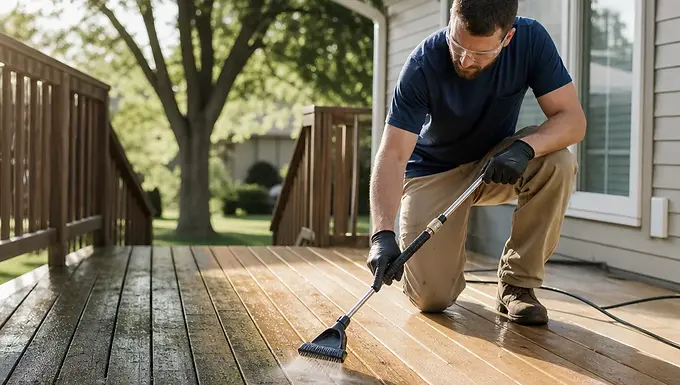
Why Elkton Decks Build Up Mildew and Algae
Elkton sits near where the Elk River meets the upper Chesapeake Bay, so the air stays damp for much of the year. Add shade, spring pollen, and boards that hold water, and mildew and algae have everything they need to grow. That film on your deck doesn't mean you've let things go. It's what damp, shady decks around here tend to do.
If your back deck has turned gray, picked up green patches, or gets slick after it rains, you're in good company in Cecil County. Mildew and algae need three things: moisture, shade, and something to feed on. Most Elkton decks give them all three. Here's where each one comes from.
Damp air off the water. With the Elk River and the Bay close by, humid summer air and heavy morning dew keep boards wet longer than you'd think. Low decks that sit close to the ground stay damp the longest.
Shade from trees and the house. Decks on the north side of a home, or under big trees, don't get enough sun to dry out after a rain. The shady corner by the steps is usually the first spot to turn green.
Spring pollen. Every spring, a yellow coat settles on everything in Elkton. Once it gets wet, it turns into food for mildew and helps the growth settle into the wood grain.
Leaves and debris between boards. Leaves that get stuck in the gaps hold water against the wood, leave dark stains, and feed more growth.
Winter wet. Rain, snow, and freezing nights work water into small cracks in the boards. Those cracks open the wood up, and growth gets in deeper come spring.
Wood and composite decks handle all this a little differently. Wood soaks up water, so mildew and algae don't just sit on top. They work down into the grain. That dull gray look is a mix of weathered wood fibers and built-up grime. Composite boards don't soak up water the same way, but they're not off the hook. Dirt and pollen leave a thin film on the surface, and mildew grows right on it, especially in shady spots. Composite is low maintenance, not no maintenance.
Why bother with it? First, it's a safety thing. Algae on boards and stairs gets slippery when it's wet, and that's no fun with kids, older parents, or a dog running around. Second, growth holds moisture against the wood, which isn't good for your boards over time. And if you're planning to stain, a deck coated in mildew and grime won't take stain evenly.
Here's the part that matters most when you're picking how to clean it. Because the growth lives down in the grain, cranking up the pressure isn't the answer. High pressure can tear up soft wood fibers and leave the surface fuzzy and rough, and the mildew can still be hiding underneath. That's why we use a wood-safe cleaning solution and low pressure on boards, railings, and stairs. The goal is to lift out what's growing in the wood without hurting the wood itself.
Signs Your Deck Needs Professional Cleaning
Not every dirty deck needs a pro. Some just need a broom and a hose. But some signs mean the grime has settled into the boards, and a quick rinse won't fix it. Here's what to look for when you step out back.
The gray or green comes right back. You swept and hosed it off, and a week later the same spots look dull again. That usually means the growth is still in the grain, and only the top layer came off.
Black dots that won't scrub off. Small black specks on wood or composite are often mildew. If a stiff brush and soapy water don't touch them, they need a proper cleaning solution.
Slick stairs or a slippery corner. If you or your kids have slid on the steps after a rain, take that seriously. Stairs and the spot by the door get the most foot traffic, so that's where a slip hurts the most.
A deck that's two colors. Boards in the sun look light, and boards under the tree or by the house look dark. That split usually means the shady side has a layer of growth and grime on it.
You're planning to stain or seal. Stain needs clean, open wood to soak into. If you put it on over grime, it can look blotchy and wear off sooner.
You got an HOA letter. Lots of neighborhoods around Elkton send exterior maintenance letters for green or dingy decks, siding, and walkways. A cleaning is usually the quickest way to clear it.
A simple test helps if you're on the fence. Drip a little water on a few boards in the sun and a few in the shade. If it beads up, the old sealer is still working. If it soaks in fast and darkens the wood, the boards are open and thirsty, and that's a good time to clean before you stain.
Now for the honest part. You probably don't need us if your deck just has a light yellow coat of spring pollen or some loose leaves. A push broom and a garden hose will handle that fine. The same goes for a newer deck that still looks good and only has a little dust on top. Save your money and check it again next season.
You should also hold off if the boards are soft, cracked through, or rotting. Cleaning won't fix that, and board or railing repair isn't part of what we do. If you're replacing the deck soon anyway, cleaning the old one isn't worth it. Get the repairs done first, then clean.
If your deck lands somewhere in the middle, like a little gray with a few green spots on the stairs, that's normal for a damp spot near the Elk River. It isn't an emergency. It does help to deal with it before it gets thick and harder to lift out. Many folks also take care of their patio, fence, or siding on the same visit, and our pressure washing services cover those too, so it's easy to get the whole backyard done at once.
Not sure which group your deck falls into? We'll come take a look. The owner checks every property before giving a quote, and estimates are always free. If a hose and a broom will do the job, we'll tell you.
See all of our exterior cleaning services.
When You Don't Need a Professional Deck Cleaning
We already covered the easy calls above, like a light pollen coat, a newer deck, or boards that are too far gone. There are a few more times when paying someone to clean your deck doesn't make sense. We'd rather tell you now than have you feel let down later.
Your stain contractor already includes cleaning. If you've hired someone to stain or seal your deck, ask whether cleaning is part of their prep. A lot of stain jobs include it. If it's in their price, you don't need to pay us to do the same thing a week earlier. If it isn't included, cleaning first makes sense.
Your HOA takes care of the decks. In some townhouse and condo communities around Elkton, the association handles outside upkeep, decks included. Before you book anything, read your HOA rules or give the management office a call. If it's their job, let them handle it.
Other work is coming soon. Are you having a tree cut back over the deck, getting new railings, or having work done on the house above it? Wait until that's finished. Branches, sawdust, and boots will undo a fresh cleaning in one afternoon. The same goes for timing around pollen. If the yellow dust is still falling hard in spring, a deck cleaned that week can look coated again within a few days. It's fine to wait until the worst of it passes.
The paint is peeling. If your deck is painted and the paint is flaking off in sheets, washing won't solve that. We use low pressure on painted surfaces so we don't strip the paint, which means loose paint will still be loose when we're done. A deck in that shape needs scraping, sanding, and repainting. Sanding and refinishing aren't part of our deck cleaning, so you'd be better off calling a painter first.
The stain isn't from growth. Some marks aren't mildew or algae at all. Here are a few common ones:
Rust rings from metal chairs or planters
Grease spots under the grill
Dark spots where a rug or mat sat for months
Burn marks from a fire pit or dropped charcoal
A cleaning may lighten these, but it may not remove them. If one spot like that is your only complaint, a full deck cleaning probably isn't worth the money. We'll tell you up front what we think will come out and what won't.
It's a tiny landing. If all you have is a small back step or a little landing by the door with some surface dirt, warm soapy water and a stiff brush may be all it needs. For context, our deck cleaning jobs typically run $150-$500, and our most common job, a 12x16 wood or composite back deck with stairs and railings, is $225. Think about whether a small spot is worth that before you call.
None of these mean your deck is in bad shape. It just means the money is better spent somewhere else for now, or later on.
What's Included in a Deck Cleaning Visit
Once you've decided your deck needs more than a broom and a hose, the next question is simple: what do you get? We'd rather spell it out now than have you guess. Here's what's part of a deck cleaning with us, what isn't, and what you might want to handle before we show up.
Every deck cleaning includes these four things:
A wood-safe cleaning solution. This is what lifts the mildew, algae, and grime out of the grain, so we don't need high pressure to do it.
Low-pressure cleaning of the boards. That's the whole walking surface, including the shady corners and the dark side by the house.
Railings and stairs. These get cleaned too, not just the flat part of the deck. The stairs matter most if they've been slick after rain.
A rinse. We rinse the deck when we're done so the cleaning solution and loosened grime don't sit on your boards.
That works the same whether your deck is wood or composite. The low-pressure approach we talked about earlier is the whole point. You get a clean deck without fuzzy, torn-up boards.
Here's what a deck cleaning doesn't include, so nobody's surprised:
Staining or sealing. We get the deck clean and ready, but we don't apply stain or sealer.
Sanding. If your boards need to be sanded smooth, that's a separate job for someone else.
Board or railing repair. Loose, cracked, or rotted pieces need a carpenter or deck builder.
Moving heavy furniture. We'll move light patio pieces like a couple of chairs or a small table. Bigger items are on you.
Under-deck cleaning. If the area under your deck needs attention, we can quote that separately.
A little prep on your end helps the visit go smoothly. Before we come, try to clear off the heavy stuff, like the grill, big planters, a sectional, or a hot tub cover. Bring in toys, dog bowls, and anything you don't want wet. If you've got potted plants you care about near the edges, move them back a bit. You don't have to clean anything first. That's our job.
If you're cleaning to get ready for stain, tell us when you call. Prepping for stain is one of the things that can change the quote. Then check with whoever's doing the staining about how long the boards should dry before they start. That way the two jobs line up and your stain goes on clean, open wood.
As for who does the work, it's us. The owner looks at every property before giving a quote, and the owner or a trusted employee does the cleaning. You're getting a local Elkton business that answers its own phone.
And if something isn't right when we're done, like a corner that still looks green or a stair we missed, just let us know. We'll come back and fix it until you're happy, or we'll refund you. That's our promise on every job, deck cleaning included.
What's Not Included and Why It's Priced Separately
You've already seen what's left out of a deck cleaning. Here's why we keep those things separate. It keeps the cleaning affordable and your quote honest. If we folded sanding, staining, and repairs into every job, every customer would pay for work most decks don't need.
Each of those extras is really its own kind of job:
Staining and sealing depend on the product you pick, the weather, and the boards drying out first. That usually means a different day. A lot of folks already have a color in mind or a stain contractor lined up.
Sanding is slow, hands-on finishing work. Plenty of decks never need it after a careful low-pressure cleaning.
Board and railing repair is carpentry. You want someone who can match the wood and make loose or rotted parts safe again.
Heavy furniture like a hot tub cover, a big sectional, or a large grill takes extra time and hands, and it can scratch boards if it's dragged. Light patio pieces are still on us.
Under-deck areas change a lot from house to house. A low deck might have gravel and weeds under it. A raised deck might have a concrete patio. If yours has a slab or patio under it, our patio cleaning or concrete cleaning service can cover it.
Within the deck cleaning itself, a few things move the price up or down:
Deck size
Wood vs. composite
Railings, stairs, and spindles, since spindles add a lot of narrow surfaces to clean
How gray or mildewed the boards are
Whether the deck is being prepped for stain
That's why a small, lightly dirty back deck can sit near the low end of the range we mentioned earlier. A bigger deck with lots of spindles and heavy green growth on the shady side can land closer to the top. We don't offer financing, so we'd rather keep the scope clear and the price fair before any water hits your boards.
Whether you call us or someone else, these questions will help you compare quotes fairly:
Is the cleaning solution part of the price, or is it extra?
Are the railings and stairs included, or just the flat part of the deck?
Who moves the furniture, and what counts as too heavy?
Is the area under the deck included or quoted on its own?
If I'm getting ready to stain, does that change the price?
A low quote that only covers the floorboards isn't much of a deal if the stairs and railings cost extra later. The same goes for a price that leaves the green stuff in the grain because someone rushed it with high pressure. Knowing exactly what you're paying for is part of hiring a careful local provider, and it's how we'd want to be treated too.

See How We Handle Deck Cleaning in Elkton
Frequently Asked Questions
Is it better to power wash a deck or use a deck cleaner?
For most Elkton decks, a wood-safe cleaning solution with low pressure beats a straight power wash. High pressure can tear up soft wood fibers and leave boards fuzzy, while the mildew hiding in the grain survives underneath. A cleaning solution lifts the growth out of the wood itself, so low pressure is enough to rinse it away clean.
Can I use dish soap to clean my wood deck myself?
Dish soap can handle light dirt or a thin coat of spring pollen if you catch it early. But once mildew or algae work down into the wood grain, soap and a brush usually just clean the surface and leave the growth underneath, so it comes right back within a week or two. If the gray or green keeps returning after scrubbing, that's the sign you need a cleaning solution made to lift growth out of the grain.
When should I avoid power washing my deck?
Skip high-pressure washing if your boards are soft, cracked, or showing rot, since pressure can push water deeper into damaged wood and make things worse. The same goes for painted decks with peeling paint, where strong pressure can strip loose paint unevenly. In both cases, repairs or repainting need to happen before any washing, pressure or otherwise.
Ready to Get Started?
Call (302) 723-8500 for a free estimate. The owner will look at your property in person and give you a clear price before any work starts.