.png)
Siding, Walkway, or Deck: Match the Surface to the Right Treatment
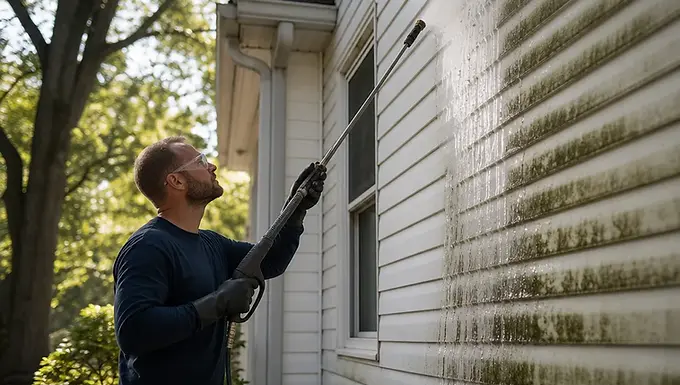
Algae doesn't care what it grows on, but your siding, walkway and deck all handle cleaning differently. We soft wash vinyl siding and use low pressure on older brick, wood and painted surfaces. Every surface gets an algae-killing treatment, time to soak in, and a full rinse.
Most folks don't expect this: the surface under the green matters as much as the green itself. If you hit the wrong surface with high pressure, you can strip paint, fuzz up wood, or push water behind siding, and the roots of the algae can still be sitting there. That's why the owner looks at your property in person before we give you a price. We want to know what the algae is growing on before we decide how to treat it.
Vinyl siding gets a soft wash. Around Elkton, the side of the house that never gets sun, usually the north side, stays damp longer. That's where the green film and mildew show up first on shaded vinyl. Vinyl panels overlap, and a hard spray can drive water up behind them. So we apply the algae-killing treatment at low pressure, give it time to work, and rinse it clean. The growth comes off because it's been killed, not because it got blasted. If the whole house needs more than an algae fix, our House Washing service covers that.
Walkways, concrete and pavers look tough, and that tempts people to crank up the pressure. After a few Elkton winters of freezing and thawing, though, a lot of concrete has small cracks and flaky spots. Pushing harder can make that worse. Pavers have their own problem, because strong spray can wash the sand out of the joints. A shaded walkway with green on it is slippery, too, so this part matters for safety. We treat the algae first and let it soak before we rinse. For general grime and stains beyond algae, our Concrete Cleaning and Driveway Cleaning services handle that.
Wood decks and fences get low-pressure methods only. Wood is soft. Too much pressure raises the grain and leaves it rough and splintery, and that damage stays long after the algae is gone. A fence line under trees, or a deck near the Elk River where the air stays damp, can turn green fast. The gentle approach is the one that doesn't hurt the boards. Our Deck Cleaning and Fence Cleaning pages cover the full wash for those.
Older brick and painted surfaces also get low pressure. Older mortar can be crumbly, and paint can lift if you go at it too hard. On these surfaces, the treatment and the dwell time do the real work.
Vinyl siding: soft wash, so water doesn't get pushed behind the panels
Concrete walkways and pavers: treat and soak first, with no blasting into cracks or joint sand
Wood decks and fences: low pressure, so the grain stays smooth
Older brick and painted surfaces: low pressure, so mortar and paint stay put
Surface type is also one of the things that moves the price. A spot of green on one fence panel is a different job than siding, a walkway and a deck all at once. When we come out, we'll tell you which surfaces need treatment and how we'd handle each one, so nothing is a surprise.
Why Algae Keeps Coming Back on Shaded, Humid Surfaces
Here's the honest answer: algae comes back because the spot it grew on hasn't changed. Algae needs shade, moisture and something to hold onto. Even after we kill the growth at the root, that north wall, that walkway under the maple, or that fence behind the shed is still shady and damp. Over time, new spores land there and settle in again.
That's why we don't promise you'll never see green again. Guaranteed no regrowth is one of the things we list as not included, because shaded areas will regrow over time. What a proper treatment gives you is a clean start. Killing the algae instead of just blasting the top layer off usually means it takes longer to come back than it would after a quick hosing.
Elkton makes this harder than a lot of places. We sit near the top of the Chesapeake Bay, and the Elk River keeps the air damp, especially on summer mornings. Surfaces that never get direct sun don't dry out between dew, rain and humid nights. Spring adds another layer. When the pollen comes down, it coats siding, decks and walkways in a yellow film. That film holds moisture and gives new growth an easy place to start.
Some things around your house can make a spot stay wetter than it needs to. These are worth a look:
Shrubs or bushes planted tight against the siding, so air can't move and the wall can't dry
Tree branches hanging over a deck, fence or walkway and keeping it in shade all day
Sprinklers that hit the house or the walkway every time they run
Gutters that overflow or downspouts that dump water right next to a wall or path
Wet leaves and pollen left sitting on a deck or walkway for weeks
You can handle most of these yourself. Trimming a bush back a foot or two, aiming a sprinkler away from the house, or clearing leaves off the deck costs you little or nothing. We don't do landscape or tree trimming, and preventive sealing isn't part of our algae work either. We'll still point out what we notice when we come out to look, because a little more sun and airflow on that side of the house makes a real difference.
If you live in a neighborhood with an HOA, regrowth is worth planning around. The shaded side of a house can go from clean to green again, and an exterior maintenance letter usually shows up when it's already noticeable from the street. Keeping an eye on the north side and the shaded walkway lets you deal with it while it's still a light film, not a thick green coat.
Catching it early helps your wallet, too. How long the algae has been growing is one of the things that moves the price, so a light film is usually a smaller job than a buildup that's been there for years. If algae is only one part of what's going on outside, our full lineup of exterior cleaning services covers driveways, decks, fences and more.
See all of our exterior cleaning services.
Low-Pressure Treatment Protects Your Siding and Brick
A lot of people think getting rid of algae means turning up the pressure. On siding and brick, more pressure can do more harm than good. The pressure washer isn't what kills algae. The treatment is. Power washing at high pressure can knock the green off the top, but if the roots are still tucked into the siding's texture or the brick's pores, the growth comes back. You've also put your house at risk without fixing the problem.
Here's what you get when we do algae removal:
An algae-killing treatment applied at low pressure
Dwell time, so the treatment kills the growth at the root
A full rinse to carry away what's left
The waiting part matters most. When the treatment has time to sit, it can reach the roots instead of just wetting the surface. Then the rinse carries the dead growth away. We don't have to force anything off, so your siding stays in place and your brick doesn't get chewed up.
Brick is a good example of why this approach works. Brick is full of tiny holes, and algae and mildew settle into those holes and into the mortar lines between bricks. A hard spray can't reach into those spots without beating up the face of the brick. A treatment that soaks in can, because it goes where the growth lives.
Most algae jobs fall in a typical range of $200-$550. Our most common job is removing green algae from the north-facing side of a home's siding plus the shaded walkway, and that runs $275. If you just got an HOA exterior maintenance letter about a green wall and a slick front path, that's often the job you're looking at.
Where your price lands depends on how much surface area is affected, how much shade and moisture the area gets, and whether you need a spot treatment or the whole property. Surface type and how long the algae has been growing also play a part. We don't offer financing, so we'll give you a clear number up front and you'll know exactly what you're paying before any work starts. The exclusions we mentioned earlier, like sealing, trimming, and a no-regrowth promise, aren't part of that price.
You'll deal with a real local person from start to finish. The owner looks at every property before quoting, and the owner or a trusted employee does the work. Estimates are always free. If something isn't right when we're done, we'll come back and fix it until you're happy, or we'll give you a refund.
If there's green creeping up your siding or brick and you don't want to risk blasting it, reach out for a free estimate. We'll come take a look, tell you what we'd treat and what it costs, and let you decide from there.
What Drives the Cost of Algae Removal
You've already seen our range and what our most common job costs. Here's what moves your quote up or down when the owner walks your property. There are five things we look at, and none of them are hidden.
How much surface is affected. A few square feet of green on one fence panel or a patio corner is a small job. The whole north wall plus the walkway and the back deck is a bigger one, because it takes more treatment, more rinsing and more time.
How long the algae has been growing. A light green haze from this past spring is easier to clean than a thick, dark coat that's been building for a few years. Older growth works deeper into siding texture, brick pores and wood grain, so it takes more work to clean properly.
What it's growing on. Siding, concrete, pavers, fences and decks each get handled differently, as we covered above. Soft wood and paver joints take more care than a flat stretch of concrete.
How much shade and moisture the spot gets. A wall under a big tree, or a path that stays damp from the Elk River air and morning dew, tends to grow heavier algae than a spot that catches afternoon sun.
Spot treatment or the whole property. You don't have to do everything at once. Treating just the shaded side of the house is a different price than treating every surface on the lot.
Here's a simple example. Say you've got green on the shaded side of your vinyl siding and a little on one section of fence. You might only care about the siding right now because that's what the neighbors and the HOA can see from the street. A spot treatment is a real option, and it's one of the things that changes the price, so you get to choose.
There are a few ways to keep the job smaller. Call while the growth is still a thin film instead of waiting another season. Take care of the easy shade and moisture fixes we mentioned earlier, since a drier wall grows less. If you're thinking about having other surfaces done, ask about them at the same visit so you can see the whole picture in one estimate and decide what fits your budget.
Whoever you hire, these questions help you tell a careful quote from a rushed one:
Will someone look at my property in person before giving me a price?
Do you kill the algae with a treatment that gets time to soak in, or just spray it off?
What pressure will you use on my siding, brick or wood?
What's included, and what's not?
Do you promise it won't come back? If someone guarantees no regrowth on a shaded wall, ask how.
Those are fair questions, and you should get straight answers. You'll get them from us at your free estimate, along with a clear number before any work starts.
When Algae Removal Isn't the Right Service
Sometimes the honest answer is that you don't need us for this, or at least not yet. Here's when algae removal isn't the right fit, so you don't spend money on the wrong fix.
It isn't algae. In an Elkton spring, a lot of what looks like a green or yellow film is just pollen. If it wipes off with a finger and there's no slimy green under it, it's sitting on top, not growing there. A good rain or a garden hose may take care of it. If the whole house just looks dull and dirty, our House Washing service fits better than an algae treatment. If your gutters have dark stripes down the front, Gutter Whitening is the service for that.
It's a small spot you don't mind. A little green in one corner of the patio or on the back of a shed that nobody sees may not be worth paying anyone for. If it isn't slippery, isn't on a path people walk, and isn't drawing an HOA letter, it's fine to leave it alone.
There's a water problem feeding it. If a downspout dumps right next to the wall or a sprinkler soaks the siding every morning, the algae will come right back after any cleaning. Fix the water source first, using the easy fixes we covered earlier, then decide if you still need a treatment.
The surface is damaged, not just dirty. Cleaning won't fix soft or rotting deck boards, loose or cracked siding panels, crumbling mortar, or concrete that's already flaking from freeze-thaw cracking. Algae can hide that damage, and once it's gone you'll see it more clearly. If the real issue is a repair, call someone for the repair first.
You want something we don't include. Our algae work doesn't cover these:
Roof algae and black streaks on shingles
Preventive sealing
Landscape or tree trimming to reduce shade
A guarantee that it won't come back, because shaded areas will regrow over time
If what you really want is a permanent fix for a wall that sits in full shade all day, no cleaning service can promise that. Anyone who does should explain how.
You're about to change the area anyway. If you've got a tree service coming to cut back the big branches over your deck, wait until after. Falling leaves, sawdust and debris will land right on a freshly cleaned surface, and you'd be paying twice. The same goes if you're in the thick of spring pollen season and plan to have the whole house done. Waiting a few weeks for the yellow dust to settle can make more sense than cleaning it now and watching it get coated again.
If none of these sound like your situation and you've got real green growth on a surface that's in good shape, that's when algae removal makes sense.

See How We Handle Algae Removal in Elkton
Frequently Asked Questions
How do I remove moss and algae from my patio without damaging it?
Treat it first, then rinse, instead of scrubbing or blasting it with high pressure. Moss and algae on a shaded patio often sit in cracks and rough spots, and strong pressure can wear those spots down further. A treatment that soaks in kills the growth at the root, so the rinse lifts it away without pushing water into cracks or washing out paver joints.
Is there a cleaning solution that works best on outdoor algae?
The best results come from a treatment designed to kill algae at the root, not just strip the green off the surface. A quick scrub or hose-down can knock off the top layer, but if the roots stay in the siding texture, brick pores, or wood grain, it grows back fast. Giving the treatment time to sit before rinsing is what makes the difference, no matter the surface.
How can I stop green algae from coming back on my walkway or siding?
You can't stop it completely in a shaded, damp spot, but you can slow it down. Trimming back bushes or branches near the wall, aiming sprinklers away from siding, and clearing wet leaves off a walkway all help that area dry out faster between rains. A drier spot simply has a harder time growing new algae, even though shaded areas will regrow over time.
Ready to Get Started?
Call (302) 723-8500 for a free estimate. The owner will look at your property in person and give you a clear price before any work starts.